The federal exercise guidelines count minutes, not steps. A step target is now under review.
Adults are told to get 150 to 300 minutes of moderate activity a week and two days of strength work. No federal step target exists — and HHS is taking evidence.
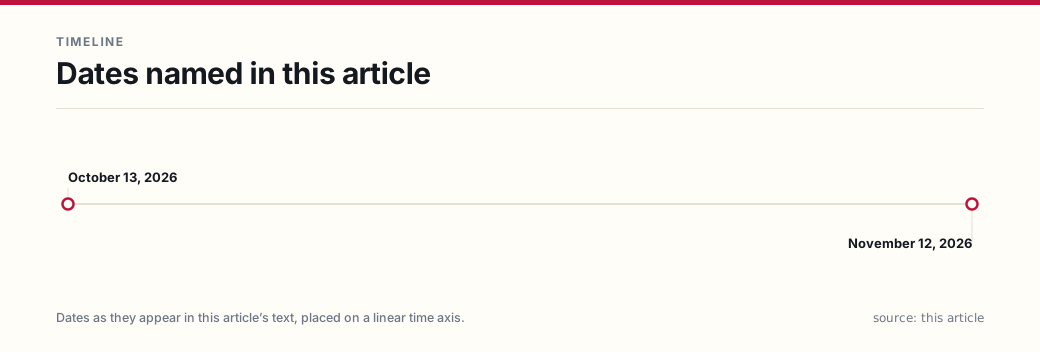
On October 13, 2026, the Department of Health and Human Services published a one-page notice in the Federal Register asking the public for something narrower than the headline suggests. It is not asking for opinions about exercise. It is asking for evidence — existing, high-quality, documented evidence — that can help the department write two things the federal guidelines have never contained: a step-count target and expanded muscle-strengthening guidance. Comments close at 11:59 p.m. ET on November 12, 2026, on docket HHS-OASH-2026-0463.
The gap the notice addresses is not small. The Physical Activity Guidelines for Americans — the federal government’s benchmark for exercise advice — are written in minutes per week and days per week. They set no step number at all. That is an odd omission in a country where the number most phones and fitness trackers set as a default goal is 10,000 steps, a figure the peer-reviewed evidence does not support as a threshold.
This is public-health guidance and federal procedure, not medical advice. The guidelines are federal and national; nothing here tells you what to do about your own health, and activity targets for a person with a heart condition or a mobility limitation are a clinical question. What follows is what the federal documents actually say, and how the comment process works.
What the current guidelines actually say
The second edition, published in 2018, is still current. Its recommendations are expressed as time and frequency:
| Group | Aerobic activity | Muscle and bone strengthening |
|---|---|---|
| Children ages 3 through 5 | Active throughout the day, aiming for at least 3 hours a day of light, moderate or vigorous activity | Not stated separately |
| Youth ages 6 through 17 | At least 60 minutes of moderate-to-vigorous activity each day | Activities that make muscles and bones strong, as part of that daily hour, with no separate weekly frequency stated |
| Adults | 150 to 300 minutes of moderate-intensity aerobic activity each week | At least 2 days each week |
Three things about the second edition are easy to miss and they change how a reader should use it.
The first key guideline for adults is not a number. It is “move more and sit less” — a replacement for inactivity, based on evidence linking sedentary time to heart disease, high blood pressure and all-cause mortality.
The 10-minute rule is gone. The first edition, from 2008, counted only bouts of at least 10 minutes. The second edition removed that requirement, so short episodes throughout the day count toward the weekly total.
The second edition is wider than adults. It also carries key guidelines for older adults, for women during pregnancy and the postpartum period, for adults with chronic health conditions and for adults with disabilities. The supplement now being drafted is not a wholesale revision of any of that; it addresses steps and muscle strengthening specifically.
The two things the guidelines leave without a number
There is no step target. The guidelines’ adult recommendation is a duration — 150 to 300 minutes a week — and ODPHP’s own summary of the second edition’s key points contains no step count. If you have been treating a phone’s default goal as a federal standard, there is nothing behind it in the guidelines.
Muscle strengthening has a frequency but not a dose. “At least 2 days each week” says how often and nothing else: not how many sets or repetitions, not how much resistance, not which movements. That is a genuine blank in a document that is otherwise specific, and it is one of the two subjects of the supplement.
What HHS is actually asking for
The notice is unusually explicit about the shape of a useful comment. It invites comments that:
“highlight existing high-quality, evidence-based reports, programs, or campaigns related to steps and/or muscle-strengthening physical activity and related positive health outcomes that can inform development of the 2027 Steps and Muscle-Strengthening Guidance.”
And it closes off the obvious misreading of a comment period:
“The Department does not make decisions on specific policy recommendations based on the number of comments for or against a topic, but on the scientific justification for the recommendation.”
Three practical consequences follow. Documents, not sentiment, are the currency. Individuals and organizations may file more than one comment. And HHS asks for complete citations or abstracts and electronic links to full articles or reports rather than attachments — which suggests the reviewers want to be able to follow a claim back to its source.
The notice cites sections 1703-1704 of the Public Health Service Act as its authority, and says comments will be reviewed by the team of federal experts supporting the guidelines work. The supplement is titled Physical Activity Guidelines for Americans, 2nd Edition Supplement: 2027 Steps and Muscle-Strengthening Guidance.
What the step evidence has shown since 2018
If the guidelines have no step target, it is not for want of research. The most widely cited pooled analysis of the question is a 2022 meta-analysis in The Lancet Public Health, funded in part by the Centers for Disease Control and Prevention, that combined 15 international cohorts — 47,471 adults, 3,013 deaths, a median follow-up of 7.1 years. Its opening sentence is a fair summary of the federal position on 10,000: “Although 10 000 steps per day is widely promoted to have health benefits, there is little evidence to support this recommendation.”
The findings are about shape, not a threshold:
| Average daily steps (quartile median) | Mortality risk compared with the lowest quartile |
|---|---|
| 3,553 (lowest) | Reference |
| 5,801 | 40 percent lower (hazard ratio 0.60) |
| 7,842 | 45 percent lower (hazard ratio 0.55) |
| 10,901 | 53 percent lower (hazard ratio 0.47) |
Risk fell as steps rose, then flattened: the analysis found the decrease levelling off at 6,000 to 8,000 steps a day for adults aged 60 and older and at 8,000 to 10,000 steps a day for adults under 60. Stepping rate was the weaker signal: once the analysis adjusted for how many steps a person took, the association between faster stepping and lower mortality was attenuated.
Two limits belong next to those numbers. This is observational data: it shows an association between more steps and lower mortality, not proof that steps cause the difference. And the flattening point is a property of the population studied, not a personal prescription.
That is the reason a supplement is being written rather than a rule. The guidelines describe themselves as providing “science-based recommendations on how physical activity can help promote health and reduce the risk of chronic disease” — guidance aimed at a population, not a clinical cut-off for one person.
How to comment, and what makes a comment worth filing
- Where. regulations.gov, docket HHS-OASH-2026-0463. The notice names no other route.
- When. Comments must be received by 11:59 p.m. ET on November 12, 2026.
- What helps. Evidence: an existing report, program, campaign, data set, case study or published paper, with a complete citation or abstract and a working link to the full text. HHS says explicitly that links are preferred to attachments.
- What does not help. Volume. The notice says the decision rests on scientific justification, not on a count of comments for or against.
- What does not exist. A fee, a form to buy, an approval to obtain, or a phone call from the government about your comment. Filing is free and unassisted; anyone charging for it is selling a step the notice does not contain.
Related in the library: what the sodium claims on food labels are allowed to mean and the FDA rule that lets salt substitutes into standardized foods.
What you can act on today
Nothing in the comment window changes the advice currently in force.
- The 2018 targets still stand: 150 to 300 minutes of moderate-intensity aerobic activity a week, plus muscle-strengthening activity on at least 2 days a week.
- Anything counts. The 10-minute bout requirement was removed in the second edition, so brief episodes add up.
- Sitting less is itself a recommendation, and the first one for adults.
- If you are tracking steps, the pooled evidence puts the point where the mortality benefit flattens below 10,000 a day for both age groups — and the single steepest drop in that data sits at the low end, between the least-active group (a quartile median of about 3,500 steps) and the next one up (about 5,800).
- If you have a health condition, are pregnant, or are managing a disability, the guidelines have separate key guidelines for you, and the practical answer is still a clinician’s, not a number on a watch.
The primary sources behind this article, and the rest of the network’s library, are collected in the official government resources directory.
This article is educational content for general information only and is not medical advice. It does not diagnose, treat or replace advice from a clinician. Nothing here is a comment on your health, and physical activity guidance for an individual is set by that person’s care team.
Frequently asked questions
- Is there a federal step goal I am supposed to be hitting?
- No. The Physical Activity Guidelines for Americans, second edition, published in 2018 and still current, states the adult recommendation in minutes of aerobic activity per week and days of muscle-strengthening activity per week. It sets no step count, and the summary of the second edition's key points published by the Office of Disease Prevention and Health Promotion contains no step target either. The 10,000 figure that appears by default on phones and watches is not a federal number.
- Do I have to be an expert, or a US resident, to comment?
- The notice invites comments from the public, and it says individuals and organizations may submit more than one. It does not require credentials and it does not restrict who may file. What it does ask for is supporting documentation for the scientific justification — complete citations or abstracts and electronic links to full articles or reports are specifically suggested, in preference to attachments.
- Will sending lots of comments in favour of a step goal make it happen?
- The notice answers this directly: the Department 'does not make decisions on specific policy recommendations based on the number of comments for or against a topic, but on the scientific justification for the recommendation.' A comment is useful to the extent it puts usable evidence in front of the reviewers, who are a team of federal experts supporting the guidelines work.
- Does the comment deadline create anything I owe, or any fee?
- No. There is no fee, no registration, no form to buy and no product that helps you comply. Comments are filed free at regulations.gov on docket HHS-OASH-2026-0463. Anyone who offers to file a comment for you for a fee, or who claims the government will call you about it, is describing a step the notice does not contain.
Sources
Each source is a primary or official reference, checked before publication. Links open the original.
- Federal Register, Vol. 91, No. 196 (October 13, 2026) — Department of Health and Human Services notice, 'Announcing Solicitation of Written Comments To Inform the Physical Activity Guidelines for Americans, 2nd Edition Supplement: 2027 Steps and Muscle-Strengthening Guidance,' 91 Fed. Reg. 64935 (FR Doc. 2026-20833): comments accepted through 11:59 p.m. ET on November 12, 2026, filed at regulations.gov on docket HHS-OASH-2026-0463; HHS states it is 'working on supplementing the Physical Activity Guidelines for Americans, 2nd edition by adding new, science-based step count and muscle-strengthening activity guidance' and invites comments highlighting 'existing high-quality, evidence-based reports, programs, or campaigns related to steps and/or muscle-strengthening physical activity'; the first edition was released in 2008 and the second in 2018; the request is made under sections 1703-1704 of the Public Health Service Act; the notice states the Department 'does not make decisions on specific policy recommendations based on the number of comments for or against a topic, but on the scientific justification for the recommendation'; comments are reviewed by a team of federal experts, and HHS suggests complete citations or abstracts and electronic links rather than attachments (federalregister.gov/documents/2026/10/13/2026-20833/announcing-solicitation-of-written-comments-to-inform-the-physical-activity-guidelines-for-americans)
- US Department of Health and Human Services, Office of Disease Prevention and Health Promotion — 'Current Guidelines,' the page the notice itself directs readers to for the guidelines and related reports, identifying the second edition as the current edition and linking the complete second edition and its executive summary (odphp.health.gov/our-work/nutrition-physical-activity/physical-activity-guidelines/current-guidelines)
- US Department of Health and Human Services, Office of Disease Prevention and Health Promotion — 'Top 10 Things to Know About the Second Edition of the Physical Activity Guidelines for Americans': adults need 'at least 150 to 300 minutes of moderate-intensity aerobic activity, like brisk walking or fast dancing, each week' plus muscle-strengthening activity 'at least 2 days each week'; youth ages 6 through 17 need 'at least 60 minutes of moderate-to-vigorous activity' each day plus activities that make muscles and bones strong; preschool-aged children should be active throughout the day, aiming for at least 3 hours per day; the first key guideline for adults is to 'move more and sit less'; the first edition counted only 10-minute bouts, and 'the second edition removes this requirement'; the second edition also carries key guidelines for older adults, women during pregnancy and the postpartum period, adults with chronic health conditions and adults with disabilities (odphp.health.gov/our-work/physical-activity/current-guidelines/top-10-things-know-about-second-edition-physical)
- National Library of Medicine, PubMed (National Institutes of Health) — Paluch AE and others, 'Daily steps and all-cause mortality: a meta-analysis of 15 international cohorts,' The Lancet Public Health, March 2022 (PMID 35247352; DOI 10.1016/S2468-2667(21)00302-9): the abstract states that 'although 10 000 steps per day is widely promoted to have health benefits, there is little evidence to support this recommendation'; 15 studies pooling 47,471 adults with 3,013 deaths over a median follow-up of 7.1 years; quartile median steps per day were 3,553, 5,801, 7,842 and 10,901; adjusted hazard ratios for all-cause mortality against the lowest quartile were 0.60 (95% CI 0.51-0.71), 0.55 (0.49-0.62) and 0.47 (0.39-0.57); restricted cubic splines showed progressively decreasing mortality risk until 6,000-8,000 steps per day for adults aged 60 and older and until 8,000-10,000 steps per day for adults younger than 60; the project was funded by the US Centers for Disease Control and Prevention (pubmed.ncbi.nlm.nih.gov/35247352/)
- Federal Register, Vol. 91, No. 196 (October 13, 2026) — the same notice, text of the request for comments: 'Individuals and organizations may submit more than one comment. Each comment should include the appropriate supporting documentation for scientific justification (e.g., verifiable data sets, links to case studies, published research papers). If providing literature or other resources, HHS suggests including complete citations or abstracts and electronic links to full articles or reports, rather than attachments.' (govinfo.gov/content/pkg/FR-2026-10-13/pdf/2026-20833.pdf)