Generic vs. brand: what has to match, and what may legally differ
An approved generic must match the brand's active ingredient, strength, dosage form and route. The pill, the fillers and the expiration date can differ.
The pharmacy hands you a tablet that looks different from the one you took last month, and the label carries the same drug name. Is it the same medicine?
The useful question is narrower than that one, and it has an answer written into regulation: which parts of “the same” does the law actually require? Four do. The rest — the fillers, the expiration date, parts of the label — are allowed to differ, within limits. Knowing which list you are looking at tells you when a difference is expected and when it is worth a phone call.
Everything below is the federal approval standard in the United States, taken from Title 21 of the Code of Federal Regulations and from Federal Register notices in which FDA writes about it. It is not medical advice, and it does not tell you whether a particular product is right for you.
What four things must be identical?
An abbreviated new drug application — the filing a generic is approved under — must refer to a listed drug, the brand product it copies (21 CFR 314.94(a)(3)). Against that reference, the applicant has to show:
- The same active ingredient. A statement that the proposed product’s active ingredient is the same as the reference drug’s (21 CFR 314.94(a)(5)(i)(A)).
- The same strength. Same labeled strength, not a nearby one (21 CFR 314.94(a)(6)(i)).
- The same dosage form. A tablet is compared with a tablet (21 CFR 314.94(a)(6)(i)).
- The same route of administration. Oral with oral, topical with topical (21 CFR 314.94(a)(6)(i)).
One more requirement sits alongside those four, and it is easy to miss because it is about the label rather than the chemistry: every condition of use in the proposed labeling must have been previously approved for the reference drug (21 CFR 314.94(a)(4)(i)). The generic inherits an approved use; it does not get to invent one.
Those requirements are not aspirational. FDA will refuse to approve an application whose information is insufficient to show the same active ingredient, the same route, dosage form and strength, or bioequivalence to the listed drug — a rule that applies unless the requirement has been waived under 21 CFR 314.99 (21 CFR 314.127(a), (a)(3), (a)(4), (a)(6)(i)).
Strength, form and route can differ from the brand — but only where the difference was the subject of an approved petition, and the regulation refuses approval outright if the product differs on any of the three and no such petition was approved (21 CFR 314.94(a)(6)(i)–(ii); 21 CFR 314.127(a)(4)). An application filed that way has to show the active ingredients are of the same pharmacological or therapeutic class and that the product can be expected to have the same therapeutic effect (21 CFR 314.94(a)(7)(ii)).
What does “bioequivalent” actually require?
Here is where the word “same” stops meaning identical. The regulation defines bioequivalence as:
the absence of a significant difference in the rate and extent to which the active ingredient or active moiety in pharmaceutical equivalents or pharmaceutical alternatives becomes available at the site of drug action when administered at the same molar dose under similar conditions in an appropriately designed study. — 21 CFR 314.3
Read that carefully and two things follow. The comparison is about rate and extent — how fast the active ingredient becomes available where it acts, and how much of it does — measured at the same molar dose. And the standard is the absence of a significant difference, which is a statistical question, not a chemical identity test.
The same definition contains a carve-out for dosage forms that are meant to release at a different rate, such as certain extended-release products. Those can still be called bioequivalent if there is no significant difference in extent, the difference in rate is intentional and reflected in the proposed labeling, it is not essential to reaching effective body concentrations on chronic use, and it is considered medically insignificant for the drug.
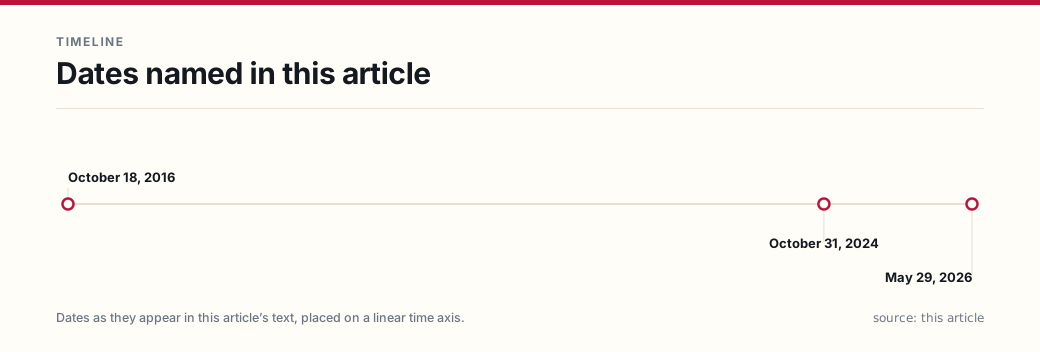
FDA has stated the acceptance range in a Federal Register notice: when it reanalyzed a generic extended-release methylphenidate product, it found the 90 percent confidence interval of the geometric mean ratio of the generic to the brand — 64.41 to 72.49 percent on one measure — “falls outside of the 80 percent to 125 percent BE acceptance criteria” (81 Fed. Reg. 71737, October 18, 2016).
Two things that number does and does not say:
- It is a statistical criterion, not an identity test. The comparison is made on the ratio of the two products’ average exposure in the study population, and what has to fall inside 80 to 125 percent is the confidence interval around that ratio. The regulation’s own test is the absence of a significant difference, not the absence of any difference (21 CFR 314.3).
- It is the acceptance criterion, not a tolerance for sloppiness. The same notice records the second study FDA ran, in which one metric came in at 60.99 to 70.50 percent — below the range, and treated as evidence of a real difference in exposure over the hours measured.
The statistical machinery behind those comparisons is guidance, and it moved recently. FDA announced the final version of Bioequivalence Studies With Pharmacokinetic Endpoints for Drugs Submitted Under an ANDA on May 29, 2026, aligning it with the international M13A guideline issued October 31, 2024, and moving the appendices on narrow therapeutic index and highly variable drugs into a companion guidance announced the same day, Statistical Approaches to Establishing Bioequivalence (91 Fed. Reg. 32057; 91 Fed. Reg. 32056).
What do the rules let differ?
This is the list that answers most “is this the same drug?” worries, and it is longer than most people expect.
| Element | What the regulation allows | Provision |
|---|---|---|
| Inactive ingredients | Depends on the route. Parenteral products must generally use the same inactive ingredients in the same concentrations, with exceptions for preservative, buffer or antioxidant. Ophthalmic and otic products must generally match too, and may differ in preservative, buffer, a substance to adjust tonicity or a thickening agent — but in an ophthalmic product a buffer or tonicity change may not be made to claim a therapeutic advantage over the listed drug. Topical, aerosolized, nebulized and nasal products must generally use the same ingredients, with justified differences allowed. | 21 CFR 314.94(a)(9)(ii)–(v) |
| Expiration date | A permitted labeling difference between the two products | 21 CFR 314.94(a)(8)(iv) |
| Formulation and pharmacokinetic details in the labeling | A permitted labeling difference | 21 CFR 314.94(a)(8)(iv) |
| Which indications appear on the label | The generic may omit an indication or other aspect of labeling protected by patent or by exclusivity | 21 CFR 314.94(a)(8)(iv) |
| Who makes it, and where | Labeling may differ because the two products are produced or distributed by different manufacturers | 21 CFR 314.94(a)(8)(iv) |
Two limits sit on top of that table. Differences in labeling are permitted only where they are required by an approved petition, by the fact of different manufacturers, by patent or exclusivity, or by revisions made to comply with current FDA labeling guidelines — and they must not render the product less safe or effective for the conditions of use that remain (21 CFR 314.94(a)(8)(iv); 21 CFR 314.127(a)(7)). And inactive ingredients are not a free-for-all: FDA will refuse approval where the ingredients or the composition raise serious questions about safety or efficacy, a list that includes an ingredient never before approved for human use by that route, a composition change to a parenteral product using an ingredient not previously approved for parenteral use, a delivery or modified-release mechanism never before approved for the drug, or a significantly greater amount of an inactive ingredient than previously used (21 CFR 314.127(a)(8)).
If you have ever noticed that a generic tastes different or dissolves differently, this is the section that explains it: where the route rules allow a difference, the fillers, binders, coatings and flavorings are the part of the formula that can vary — subject to those constraints.
What is the rating, and when did it change?
The public record of those ratings is Approved Drug Products with Therapeutic Equivalence Evaluations — the Orange Book. FDA’s five criteria for classifying products as therapeutically equivalent, as the agency quotes them from the Orange Book’s preface, are that the products are approved as safe and effective; are pharmaceutical equivalents, containing identical amounts of the same active drug ingredient in the same dosage form and route and meeting compendial or other applicable standards of strength, quality, purity and identity; are bioequivalent; are adequately labeled; and are manufactured in compliance with current good manufacturing practice (81 Fed. Reg. 71737, footnote 4).
The 2016 notice also shows what happens when that judgment goes the other way. FDA concluded that the rating of Mallinckrodt’s extended-release methylphenidate product “should be changed from AB to BX to indicate that the data are insufficient to determine that the Mallinckrodt product is therapeutically equivalent to CONCERTA.” It asked the manufacturer to confirm bioequivalence within six months or withdraw the product; the manufacturer did neither, and FDA proposed to withdraw approval of the application, with an opportunity for a hearing.
The rating, in other words, records a judgment the agency maintains and can revisit in public — not a stamp applied once at approval and never re-read.
What are narrow therapeutic index drugs?
One group deserves its own paragraph. For drugs with a narrow therapeutic index, and for highly variable drugs, FDA’s guidance sets out separate statistical approaches, including reference scaled average bioequivalence, instead of the single comparison described above. Those methods now sit in the Statistical Approaches to Establishing Bioequivalence guidance announced May 29, 2026, having been moved there from the bioequivalence guidance (91 Fed. Reg. 32056; 91 Fed. Reg. 32057).
The practical consequence is narrow but worth stating: for these drugs, “the same” rests on a different calculation than for an ordinary tablet, which is why a product switch on one of them is a reasonable thing to raise with the prescriber who chose the dose.
What should you check, in order?
- Read the four identity elements off the label. Active ingredient, strength, dosage form, route. If all four match, the difference you are looking at is not one of the properties the rules fix.
- Ask which product was dispensed last time. A change of manufacturer between fills is one of the reasons the regulation itself gives for a difference in the labeling, so the pharmacy can tell you whether that is what you are seeing.
- If something feels different, say so to the pharmacist and the prescriber rather than adjusting the dose yourself. The existence of a permitted range does not mean every difference is irrelevant to every person.
- On a narrow therapeutic index drug, treat a product switch as a conversation, not a formality — the statistical approach behind the approval is a different one, and the person who chose your dose is the one who can judge whether it matters.
What does this not cover?
These rules govern what FDA approves, not what a pharmacy dispenses; the question of whether a pharmacy may hand you a different manufacturer’s product without contacting your prescriber is a separate body of rules, and this article does not answer it. It also does not compare prices, and it cannot tell you whether a specific generic is right for you — that is a conversation with the clinician who prescribed it.
What it can tell you is where to look. Four properties are fixed. The rest is variable by design, and the variation has limits that are written down, published, and occasionally enforced in public.
Frequently asked questions
- Is a generic drug exactly the same as the brand?
- No, and the rules do not ask it to be. An approved generic must have the same active ingredient, the same strength, the same dosage form and the same route of administration as the brand it copies, and it must be shown to be bioequivalent to it. Its inactive ingredients, its expiration date and parts of its labeling can differ, within limits set in 21 CFR 314.94.
- Can a generic have different inactive ingredients?
- It depends on how the drug is given. Under 21 CFR 314.94(a)(9), a product for parenteral use must generally contain the same inactive ingredients in the same concentrations, with narrow exceptions for preservative, buffer or antioxidant. Ophthalmic and otic products follow a similar rule with a slightly longer exception list. Products for topical use, solutions for aerosolization or nebulization, and nasal solutions must generally use the same ingredients but may differ if the applicant characterizes the difference and shows it does not affect safety or efficacy. For other products, the applicant must identify the inactive ingredients and show they do not affect safety or efficacy.
- How different can a generic's blood levels be?
- The comparison is statistical rather than exact. Bioequivalence is defined in 21 CFR 314.3 as the absence of a significant difference in the rate and extent at which the active ingredient becomes available at the site of drug action, at the same molar dose under similar conditions. In a 2016 Federal Register notice, FDA described its acceptance criteria as requiring the 90 percent confidence interval of the geometric mean ratio of the test product to the reference product to fall inside 80 to 125 percent.
- What did the AB-to-BX change mean?
- It meant FDA had concluded that its earlier equivalence rating was no longer supported. In a 2016 Federal Register notice the agency said the rating of a generic extended-release methylphenidate product should change from AB to BX 'to indicate that the data are insufficient to determine that the [product] is therapeutically equivalent' to the brand, then asked the manufacturer to confirm bioequivalence within six months or withdraw, and proposed to withdraw approval of the application when it did neither.
- Can a therapeutic equivalence rating be taken back?
- Yes. In 2016 FDA said the rating of an extended-release methylphenidate product should change from AB to BX after its bioequivalence data were reanalyzed, asked the manufacturer to confirm bioequivalence within six months or withdraw, and proposed to withdraw approval of the application when it did neither. It is a documented case of the rating being a judgment FDA maintains rather than a one-time stamp.
Sources
Each source is a primary or official reference, checked before publication. Links open the original.
- 21 CFR 314.3 — Definitions (Bioequivalence). The definition the whole approval standard rests on: bioequivalence 'is the absence of a significant difference in the rate and extent to which the active ingredient or active moiety in pharmaceutical equivalents or pharmaceutical alternatives becomes available at the site of drug action when administered at the same molar dose under similar conditions in an appropriately designed study'; plus the carve-out for dosage forms with an intentional difference in rate, which applies only if the difference is reflected in the proposed labeling, is not essential to attaining effective body drug concentrations on chronic use, and is considered medically insignificant for the drug. govinfo.gov/content/pkg/CFR-2025-title21-vol5/xml/CFR-2025-title21-vol5-sec314-3.xml
- 21 CFR 314.94 — Content and format of an ANDA. The four identity requirements this article is built on — refer to a listed drug (a)(3), conditions of use previously approved for that drug (a)(4)(i), the same active ingredient (a)(5)(i), the same route of administration, dosage form and strength (a)(6)(i)(A) — plus the bioequivalence information requirement and the complete study report rule (a)(7)(i), the labeling rule (a)(8)(iii)–(iv) allowing annotated differences that 'may include differences in expiration date, formulation, bioavailability, or pharmacokinetics' and permitting omission of an indication protected by patent or exclusivity, and the inactive ingredient rules by route of administration in (a)(9)(ii) through (a)(9)(v). govinfo.gov/content/pkg/CFR-2025-title21-vol5/xml/CFR-2025-title21-vol5-sec314-94.xml
- 21 CFR 314.127 — Refusal to approve an ANDA. The grounds that make those requirements binding: insufficient information that the active ingredient is the same (a)(3), that route, dosage form or strength is the same (a)(4), that the drug is bioequivalent to the listed drug (a)(6)(i), that the labeling is the same apart from permitted differences, with the condition that those differences 'do not render the proposed drug product less safe or effective than the listed drug for all remaining, nonprotected conditions of use' (a)(7), and the separate ground for inactive ingredients or composition that raise serious questions of safety or efficacy (a)(8), including its list of example changes. govinfo.gov/content/pkg/CFR-2025-title21-vol5/xml/CFR-2025-title21-vol5-sec314-127.xml
- 21 CFR 320.1 — Definitions for part 320. Establishes that the definitions in 21 CFR 314.3 govern the bioavailability and bioequivalence requirements in part 320. govinfo.gov/content/pkg/CFR-2025-title21-vol5/xml/CFR-2025-title21-vol5-sec320-1.xml
- Federal Register — 'Mallinckrodt Pharmaceuticals; Proposal To Withdraw Approval of an Abbreviated New Drug Application for Extended-Release Methylphenidate Tablets; Opportunity for a Hearing', Food and Drug Administration, published October 18, 2016, 81 Fed. Reg. 71737 (FR Doc. 2016-25093; Docket No. FDA-2016-N-3118). The source for the acceptance range as FDA states it — 'the 90 percent confidence interval (CI) of the geometric mean ratio of the test product ... to reference product ... falls outside of the 80 percent to 125 percent BE acceptance criteria' — for the change of the product's therapeutic equivalence rating from AB to BX, for the 27-mg study whose 90 percent CI for one metric ran 60.99 to 70.50 percent, and for the footnote quoting the Orange Book's five criteria for classifying products as therapeutically equivalent. federalregister.gov/documents/2016/10/18/2016-25093/mallinckrodt-pharmaceuticals-proposal-to-withdraw-approval-of-an-abbreviated-new-drug-application
- Federal Register — 'Bioequivalence Studies With Pharmacokinetic Endpoints for Drugs Submitted Under an Abbreviated New Drug Application; Guidance for Industry; Availability', Food and Drug Administration, published May 29, 2026, 91 Fed. Reg. 32057 (FR Doc. 2026-10703; Docket No. FDA-2013-D-1464). The final guidance, finalizing the draft of August 23, 2021; records that it was updated to align with 'M13A Bioequivalence for Immediate-Release Solid Oral Dosage Forms' issued October 31, 2024, and that the appendices on the statistical analysis for reference scaled average bioequivalence for narrow therapeutic index drugs and highly variable drugs were removed and incorporated into the companion guidance below. federalregister.gov/documents/2026/05/29/2026-10703/bioequivalence-studies-with-pharmacokinetic-endpoints-for-drugs-submitted-under-an-abbreviated-new
- Federal Register — 'Statistical Approaches To Establishing Bioequivalence; Guidance for Industry; Availability', Food and Drug Administration, published May 29, 2026, 91 Fed. Reg. 32056 (FR Doc. 2026-10705; Docket No. FDA-2001-D-0197). The final guidance that now carries the statistical methods for narrow therapeutic index drugs and highly variable drugs, including reference scaled average bioequivalence, together with recommendations on missing data, outlier detection, population bioequivalence and in vitro comparisons; it finalizes the December 5, 2022 draft and replaces the 2001 guidance. federalregister.gov/documents/2026/05/29/2026-10705/statistical-approaches-to-establishing-bioequivalence-guidance-for-industry-availability