The FDA has rewritten 80 food standards so salt substitutes can be used
From December 14, 2026, standardized foods such as bread, cheese and canned vegetables may use salt substitutes. What the rule does not require.
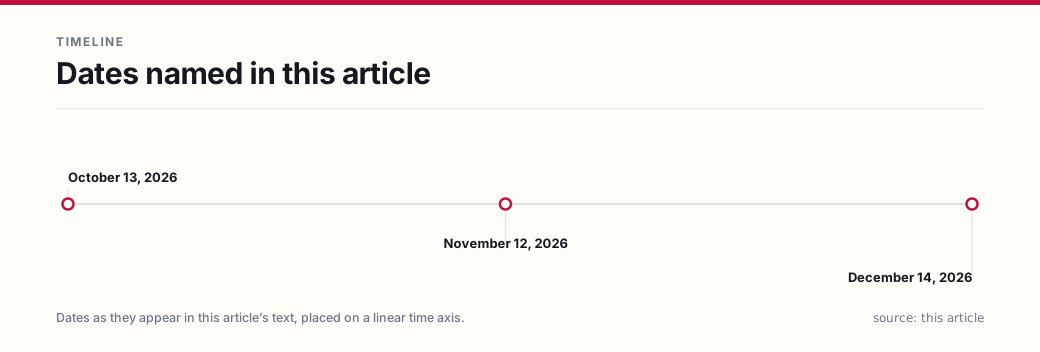
The Federal Register of October 13, 2026 carries a rule that changes what American food is legally allowed to be made of, and almost nothing about what is on the shelf this week. The Food and Drug Administration has amended 80 standards of identity — the federal definitions that decide what a food sold under a protected name may contain — so that manufacturers may replace salt with a substitute. The rule takes effect December 14, 2026. It obliges no company to use the new flexibility, and it creates no deadline for a household.
That distinction is the whole of the article, so it is worth stating plainly at the start: this is a permission, not a requirement. In the summary of the rule’s costs and benefits, the FDA states that there are no regulatory costs because there are no regulatory requirements and no regulatory penalties if a manufacturer of a standardized food declines to use the flexibility. Nothing sold today has to be reformulated, and nothing has to be taken out of a recipe.
This is federal food-standard law, and it applies nationwide. It says nothing about price, inspection or marketing, which are governed elsewhere, and it is not a statement about state law on any other subject. Where the article gives a date, that date is in the rule.
What a “standard of identity” actually is
A standard of identity is a federal recipe with legal force. If a food has one, a product carrying that food’s name has to match it: specified ingredients, specified optional ingredients, sometimes specified proportions. Part 169 alone carries both § 169.140 “Mayonnaise” and § 169.150 “Salad dressing” as separate standards, which is why the two are different products with different labels rather than two names for one thing.
Sixteen parts of the Code of Federal Regulations are amended. That is where the figure of 80 comes from — the FDA counts the individual standards involved, not the parts:
| Part | Category |
|---|---|
| 130 | Food standards: general (gains the new subpart C and § 130.30) |
| 131 | Milk and cream |
| 133 | Cheeses and related cheese products |
| 136 | Bakery products |
| 137 | Cereal flours and related products |
| 139 | Macaroni and noodle products |
| 145 | Canned fruits |
| 150 | Fruit butters, jellies, preserves and related products |
| 155 | Canned vegetables |
| 156 | Vegetable juices |
| 158 | Frozen vegetables |
| 161 | Fish and shellfish |
| 163 | Cacao products |
| 166 | Margarine |
| 168 | Sweeteners and table sirups |
| 169 | Food dressings and flavorings |
The common thread is that these are the standards that name salt — sodium chloride — as a required or optional ingredient. Where a standard required salt, a manufacturer could not simply leave it out and still sell the product under its standardized name, and the standards limited how far a substitute could take its place. Foods without a standard of identity were never in that position; the rule notes that salt substitutes may already be used in non-standardized foods, and have been for a long time.
What the rule permits, in the FDA’s own words
Rather than listing approved substitutes, the rule adds one definition and applies it across the amended standards — what the agency calls a horizontal approach. The new 21 CFR 130.30(c)(1) defines a salt substitute as:
“a safe and suitable ingredient (or combination of safe and suitable ingredients) that is used to replace some or all of the added salt (sodium chloride), to reduce sodium in the food, and that serves the functions of salt in the food.”
Three limits sit inside that sentence, and they matter more than the permission:
- “Safe and suitable.” The term is defined at 21 CFR 130.3, and the FDA’s response to comments points out that those definitions cap use at levels no higher than necessary to achieve the intended purpose in the food. The rule does not authorise any new substance: ingredients used as substitutes still have to be generally recognized as safe for that use or an approved food additive under section 409 of the Federal Food, Drug, and Cosmetic Act.
- “Serves the functions of salt.” Salt is not only a taste. The FDA lists curing meat, baking, thickening, retaining moisture, enhancing flavor and preserving among its jobs, and commenters pointed out the safety side of the same coin — controlling moisture and fermentation. Because a substitute has to perform those functions, how much salt can be replaced depends on the food.
- No minimum. The rule does not require a given percentage of sodium reduction, and does not prescribe the sodium content of a reformulated food. If a manufacturer uses a substitute at all, the FDA’s reading is that some of the salt must be replaced.
A fourth limit is structural. Under § 130.30(b), a substitute “must not change the basic nature and essential characteristics of the food.” In the agency’s response, that is what is meant to keep characteristics such as stability and moisture content intact — and it is the reason the FDA describes reformulation as something that takes time rather than something that happens by switching one ingredient for another.
What does not change at all
- The ingredient list. The rule creates no new labeling requirement; existing ones do the work. Ingredients must be declared by common or usual name in descending order of predominance by weight under 21 CFR 101.4, a section that says expressly that it covers foods complying with standards of identity. The FDA’s response states that a standardized food made with potassium chloride must name it as “potassium chloride” or “potassium salt”. Monosodium glutamate, if used, must be declared as “monosodium glutamate”.
- The Nutrition Facts panel. A manufacturer using potassium-based ingredients must declare the required potassium information where the food contains two or more percent of the recommended daily intake for potassium per serving, per the FDA’s response — the same disclosure that already exists for non-standardized foods.
- Sodium claims. “Reduced sodium” still means at least 25 percent less than the reference product, and “low sodium” still means 140 mg or less per reference amount. The rule does not move those thresholds; what each claim is allowed to mean is its own piece.
- Responsibility for safety. The FDA’s answer to commenters worried about safety is that manufacturers are responsible for the safety of their food whether or not they use substitutes.
The dates, and the one route that could delay part of it
The rule is effective December 14, 2026 — with an exception written into its own effective-date section: “except as to any provisions in the SOI for dairy products that may be stayed by the filing of proper objections.”
That is a real procedural route, and it is narrow. A party who would be adversely affected by the amended standards for milk and cream (part 131) or cheeses and related cheese products (part 133) may file objections with the FDA’s Dockets Management Staff by November 12, 2026. Each objection has to be separately numbered, identify the provision objected to and the grounds for it, and state whether a hearing is requested; a request for a hearing has to include a detailed description and analysis of the factual information the objector intends to present. The FDA will publish notice of the objections it received, or of the absence of any.
For a household, the practical reading is simple: the deadline belongs to regulated parties, not consumers, and only the dairy provisions can move. Everything else in the rule takes effect on December 14.
The disagreement, stated as a disagreement
This rule is not universally welcomed, and the record is more useful when both sides are set out than when one is chosen.
The FDA frames the rule as a flexibility measure that “supports the Make America Healthy Again initiative,” citing the White House’s priorities page, and notes that the Dietary Guidelines for Americans advise the general population aged 14 and over to consume less than 2,300 milligrams of sodium per day. The Office of Information and Regulatory Affairs designated it a significant regulatory action under Executive Order 12866 and, under Executive Order 14192, a deregulatory action; the agency also notes it falls within the scope of the Congressional Review Act. Sodium reduction, the rule says, may help reduce the risk of hypertension, a major risk factor for heart disease and stroke.
Commenters raised the other side in writing. Some argued the rule would introduce “harmful” or “man-made” chemicals, or that substitutes would arrive without sufficient long-term safety data. Some argued it would in effect single out potassium chloride, increasing potassium in the food supply. And some raised the group most directly affected: people who must limit potassium — chronic kidney disease, heart failure, certain medications — who may find a lower-sodium product appealing without noticing what replaced the salt. The FDA disagreed on the safety objection, pointing to the existing food-additive and GRAS regime, and answered the potassium objection by pointing to the label. It also conceded a limit on what it can predict: it does not know how many foods will be reformulated or with what. It expects the use of potassium chloride to be self-limiting because of its bitter and metallic taste.
Neither position is adopted here. What a reader can act on is the disclosure: an ingredient list that names what replaced the salt, and a potassium figure where the amount is high enough to require one.
What to do now
- Nothing needs filing, buying or registering. The FDA’s rule authorises no product and no seller. Anyone offering a “registered” or “FDA-approved” salt substitute, or asking for a fee to check whether a food complies, is inventing a step the rule does not contain.
- If you want less sodium, the label remains the tool. Compare the sodium in milligrams per serving, and use the percentage Daily Value as a quick screen — 5 percent or less per serving is low, 20 percent or more is high. The sodium claims, and the traps in them, are set out here.
- If you have been told to watch potassium, check the ingredient list for “potassium chloride” or “potassium salt” and ask before you switch a product your household uses regularly. Who should ask first, and why, is set out here.
- Expect the change to be slow and partial. A permission takes effect on a date; a reformulated product appears when a manufacturer decides it is worth the cost of reformulating and relabeling, which the FDA discusses and does not quantify.
The network keeps the primary sources behind this piece, and the rest of the library, in its official government resources directory.
This article is educational content for general information only and is not professional advice. It is not medical advice and does not diagnose, treat or replace advice from a clinician or pharmacist. Individual sodium and potassium targets are set by your own health care team, not by a label claim.
Frequently asked questions
- Does this rule ban salt or force food companies to change their recipes?
- No on both counts. The rule adds permission, not obligation. The FDA states that there are no regulatory costs because there are no regulatory requirements and no regulatory penalties if a manufacturer of a standardized food chooses not to use the flexibility. Nothing sold today has to be reformulated, and nothing has to be removed from a recipe.
- Is every low-salt product now going to contain potassium chloride?
- That was one of the concerns raised in comments, and the FDA answered it directly: the final rule does not limit salt substitutes to potassium-based ingredients, and the definition does not name any substitute at all. The agency also says it does not know how many foods will be voluntarily reformulated or which ingredients will be used, so no shelf-wide shift can be predicted from the rule itself.
- If I have been told to limit potassium, what should I check?
- The ingredient list and the Nutrition Facts panel. The FDA's response to comments says a manufacturer using potassium-based ingredients must declare the required potassium information on the Nutrition Facts label of a food containing two or more percent of the recommended daily intake for potassium per serving, and that the ingredient statement must name 'potassium chloride' or 'potassium salt'. That is label reading, not medical advice — if a clinician has given you a potassium limit, ask them or a pharmacist before switching products.
- Is there a deadline I need to act on?
- No consumer deadline exists. December 14, 2026 is the date the rule takes effect for manufacturers, and November 12, 2026 is the deadline for filing objections to the dairy provisions — a route aimed at parties who would be adversely affected by those specific standards, not at households.
Sources
Each source is a primary or official reference, checked before publication. Links open the original.
- Federal Register, Vol. 91, No. 196 (October 13, 2026) — Food and Drug Administration final rule, 'Use of Salt Substitutes To Reduce the Sodium Content in Standardized Foods,' 91 Fed. Reg. 65040-65070 (FR Doc. 2026-20848; Docket No. FDA-2022-N-2226; RIN 0910-AI72): effective December 14, 2026; amends 80 standards of identity to permit safe and suitable salt substitutes; creates subpart C and Sec. 130.30 in 21 CFR part 130; the amended parts are 130, 131, 133, 136, 137, 139, 145, 150, 155, 156, 158, 161, 163, 166, 168 and 169; more than 120 comments were received on the proposed rule; the agency states there are no regulatory costs and no penalties if a manufacturer declines to use the flexibility; dairy objections or requests for a hearing are due November 12, 2026 and may stay those provisions; the rule states it supports the Make America Healthy Again initiative (federalregister.gov/documents/2026/10/13/2026-20848/use-of-salt-substitutes-to-reduce-the-sodium-content-in-standardized-foods)
- Government Publishing Office — the same final rule as published, HTML and PDF: the regulatory text of Sec. 130.30(c)(1) defines a salt substitute as 'a safe and suitable ingredient (or combination of safe and suitable ingredients) that is used to replace some or all of the added salt (sodium chloride), to reduce sodium in the food, and that serves the functions of salt in the food'; Sec. 130.30(b) provides that ingredients used as substitutes must not change the basic nature and essential characteristics of the food; the document is 31 pages (govinfo.gov/content/pkg/FR-2026-10-13/html/2026-20848.htm and govinfo.gov/content/pkg/FR-2026-10-13/pdf/2026-20848.pdf)
- Federal Register, Vol. 88, No. 69 (April 10, 2023) — the proposed rule this one finalizes, 'Use of Salt Substitutes To Reduce the Sodium Content in Standardized Foods,' 88 Fed. Reg. 21148 (FR Doc. 2023-06456), which set out the horizontal approach of a single definition applied across the standards that permit salt (federalregister.gov/documents/2023/04/10/2023-06456/use-of-salt-substitutes-to-reduce-the-sodium-content-in-standardized-foods)
- 21 CFR 101.4 — food labeling, designation of ingredients: ingredients must be listed by common or usual name in descending order of predominance by weight, and the section says expressly that this applies to foods that comply with standards of identity; ingredients present at 2 percent or less by weight may be grouped at the end after a quantifying statement (ecfr.gov/current/title-21/section-101.4)
- 21 CFR 101.61 and 21 CFR 101.56 — the sodium-claim thresholds a food must meet to say 'sodium free' (less than 5 mg per reference amount and per labeled serving), 'low sodium' (140 mg or less per reference amount), 'reduced sodium' (at least 25 percent less than the reference food), 'light in sodium' (at least 50 percent less) and 'no salt added' or 'unsalted' (no salt added during processing, and the food it resembles is normally processed with salt) (ecfr.gov/current/title-21/section-101.61 and ecfr.gov/current/title-21/section-101.56)
- US Food and Drug Administration — 'Sodium in Your Diet': the Daily Value for sodium is less than 2,300 milligrams per day; 5 percent of the Daily Value or less per serving is considered low and 20 percent or more is considered high; Americans eat on average about 3,400 mg of sodium per day; over 70 percent of dietary sodium comes from packaged and prepared foods rather than from salt added at the table; sodium works as an ingredient for curing meat, baking, thickening, retaining moisture, enhancing flavor and preserving (fda.gov/food/nutrition-education-resources-materials/sodium-your-diet)
- National Institutes of Health, Office of Dietary Supplements — Potassium fact sheet for consumers: 'Potassium is an ingredient in many salt substitutes that people use to replace table salt. If you have kidney disease or if you take certain medications, these products could make your potassium levels too high. Talk to your health care provider before using salt substitutes.' (ods.od.nih.gov/factsheets/Potassium-Consumer/)
- The White House — 'Make America Healthy Again' priorities page: the page the final rule points to when it states that the rule 'supports the Make America Healthy Again initiative'; it is cited here as the source named in the rule, not as a source for any figure in this article (whitehouse.gov/priorities/maha/)